At midnight on Wednesday the 24th of September 2025, my life changed forever.
Not in a way I ever wanted, and certainly not with any sense of meaning attached to it at the time. Meaning came later.
In those first hours and days, there was only shock, pain, and the unsettling realisation that my body was no longer something I could rely on.
What followed was not a single event, but a chain of moments that tested my body, my patience, and my sense of control.
I’d had pain for a few days, but I’d just put it down to my hernia being sore and I was already booked in for hernia surgery in November.
I went from sitting in the barbershop in the afternoon to A&E that evening. I woke up in extreme pain. I was struggling to stand up straight, the pain in my stomach was so severe and unlike anything I had felt before. I was also struggling to pee. One of the more serious complications of having a hernia is being unable to go to the toilet, and if this happens, the advice is to go to hospital.
As I struggled to the car I knew something was wrong but I wasn’t ready for what came next.
A&E was busy. There were no beds, and I was told it was a nine-hour wait to see a doctor. After an hour or so my condition was worsening and a bed was found. Bloods were taken, and I was pumped full of morphine, which was a great relief from the pain.
My bloods came back, and my inflammation markers were 498 when they were supposed to be under 5. By this time, I had been pumped full of morphine, so I was a little out of it. The doctor kept asking me how bad I’d been feeling in the build-up to this because I had a raging infection inside my body.
Hindsight is a great thing, and looking back, I’d had some flare-ups, infections and stomach issues, but they were sporadic, and I just put them down to picking up bugs and being unwell. I get regular blood work done, and my markers had been off. I probably should have explored this further, but I didn’t.
I was admitted to a ward and assessed by the surgical team. I was diagnosed with diverticulitis. Their plan was for me to have keyhole surgery, where they would wash my abdomen out and hopefully that would be enough.
It was a waiting game for all of us. My family were worried and upset. I was scared. Everyone was on tenterhooks, playing the waiting game.
We were all hoping the keyhole washout would be enough, but I wasn’t so sure.
I had the surgery, spent two days in intensive care, and then went back to the ward. After five days in the ward, I was discharged and sent home.
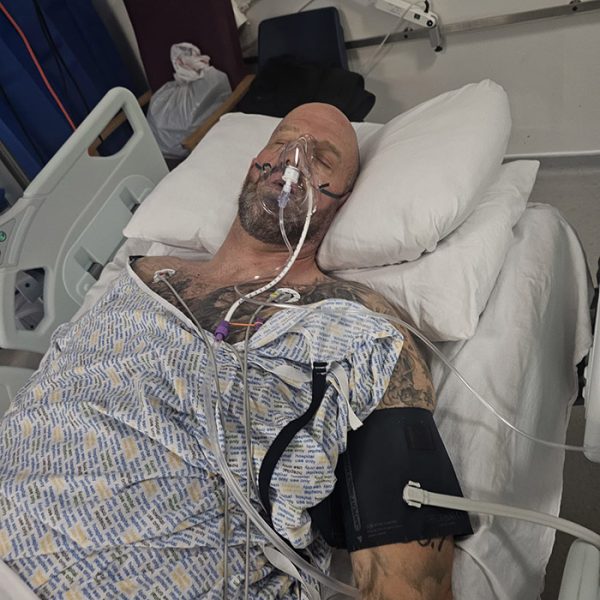
I was only home for a few days when I became unwell again. This time, it was worse. I could feel something was seriously wrong inside me, but I kept most of it to myself at the time. My family were worried enough.
I was admitted to the ward again. More bloods were taken and further tests were carried out.
This time, my inflammation markers were 580, and I was deteriorating quickly. This was shocking news but it tallied with the level of pain I was in.
I was given the choice of surgery that night, or in a couple of days. I chose to go to surgery that night. This time, the doctor’s plan was to perform an emergency Hartmann’s procedure, where part of my colon was removed and the remaining end of my bowel was brought through my abdominal wall to create a stoma.
I completed the relevant paperwork and headed down to theatre, kissing my wife and kids goodbye and putting a brave face on it.
I prayed all the way to theatre, asking God to keep me alive. I just knew deep down this was touch and go.
In that moment, I realised there were still so many things I wanted to do and experience in life. I didn’t want mine to be over.
I also made a promise that if I got a second chance, I wouldn’t waste it. I would find purpose in the pain and create triumph after tragedy.
The operation began at around 8pm and lasted six and a half hours, meaning the surgical team operated into the early hours. I came out of theatre at around 2:30am.
While I was in surgery, Julie was told to go home and wait for a call. My wife and kids cuddled in on the couch together, watching a movie to try to distract themselves while nervously waiting for news from the surgeon.
For me, the Hartmann’s procedure was a one-way ticket. I woke up with a stoma and no idea what that would mean for the rest of my life.
There was 2.5 litres of infected fluid in my abdomen. I had developed abdominal sepsis. This second time, I spent a total of three days in intensive care.
I came out of surgery with thirty staples down my stomach and fluid on my lungs.
I lost around thirty pounds of weight in a matter of weeks. I looked grey, gaunt, and fragile.
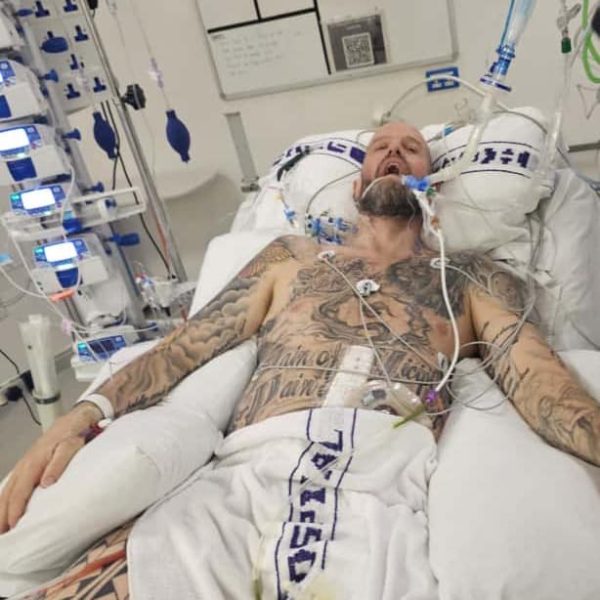
Some mornings, simply standing up felt like a negotiation rather than a decision. I needed help just to get upright, something I had never experienced in my adult life.
In all honesty, I felt very broken during this phase. I cried a lot. I was trying to process the shock of what had happened, the fact that I had come so close to death, and seeing the people I loved most upset and frightened. There were times when I simply thought, “Why me?”
Suddenly, I was completely dependent on other people just to do things I had always taken for granted.
For someone who had spent years working in health, fitness and human performance, it was a confronting place to find myself.
Fitness had become a huge part of my life. I had built my career around helping people become stronger, healthier and more capable, both physically and mentally. I was used to training clients, encouraging them, pushing them and helping them find a pathway towards becoming stronger versions of themselves.
I had spent years training my own body too. I knew what it felt like to train hard, to lift heavy and to challenge myself physically.
Now I was the weakest I had ever been.
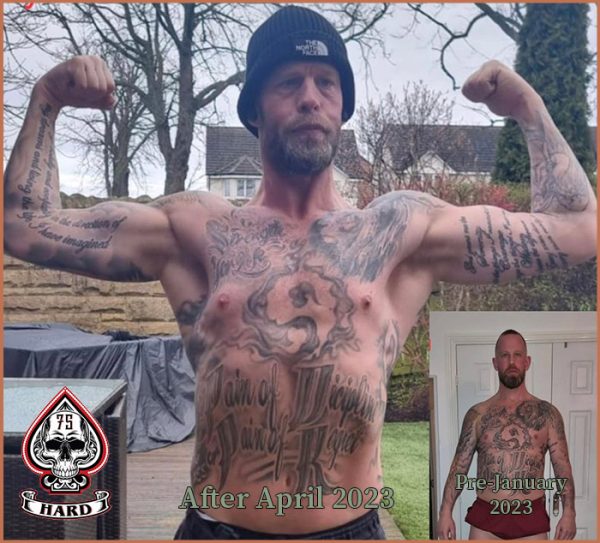
I had gone from training regularly and being physically capable to not having the strength to get myself onto my own two feet without help.
Now I was the one who needed to rebuild.
Once the immediate danger had passed, my instinct was to regain some sense of control, so I started asking questions.
What should I eat?
How much should I drink?
How should I manage my pain?
When should I move
When could I train?
How do I rebuild my strength?
The answers I received were often well-meaning but very broad.
“Just be healthy.”
“Get off the medication as quickly as possible.”
“Take it easy.”
The problem was that these were answers without much practical direction.
In those early weeks, I struggled to get even 800 calories a day into my body. Just a month earlier, I had been averaging around 4,000 calories a day, largely from whole foods, with a protein intake of around 250 grams. To put that into perspective, that was roughly the amount of protein I’d get from two large chicken breasts, a couple of scoops of protein powder and a handful of eggs across the day.
That was the level of food and protein my body had been accustomed to consuming, and suddenly I was struggling to eat at all.
Food was something I knew about. I had spent years studying nutrition, keeping food journals and paying close attention to how my body responded to different inputs. But suddenly, none of that seemed to apply.
I was living on whatever I could tolerate: soups, shakes, ice lollies and eventually simple foods like rice pudding, toast, eggs, bagels and protein smoothies.
Eating was no longer about performance. It was about getting enough nourishment into a body that was struggling to recover.
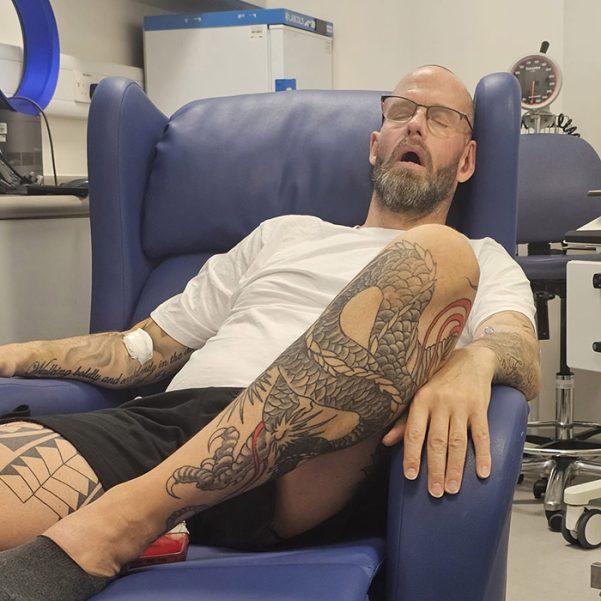
For around three months, I also had to sleep sitting upright because lying on my side was simply too painful. Sleeping became a completely different experience. I couldn’t just get into bed, lie down and fall asleep like I had always done. I had to find a position that my body could tolerate and try to get whatever rest I could.
I would wake during the night uncomfortable and disorientated, sometimes not really knowing where I was or what time it was. Sleep was broken and recovery became something I had to work around rather than something I could simply rely on.
Julie really helped me through this. She bought me extra pillows and stacked them around me like a chariot for me to rest into. When I woke during the night, Julie would help fix them for me and make sure I was as comfortable as I could be.
Julie was amazing. My very own Florence Nightingale.
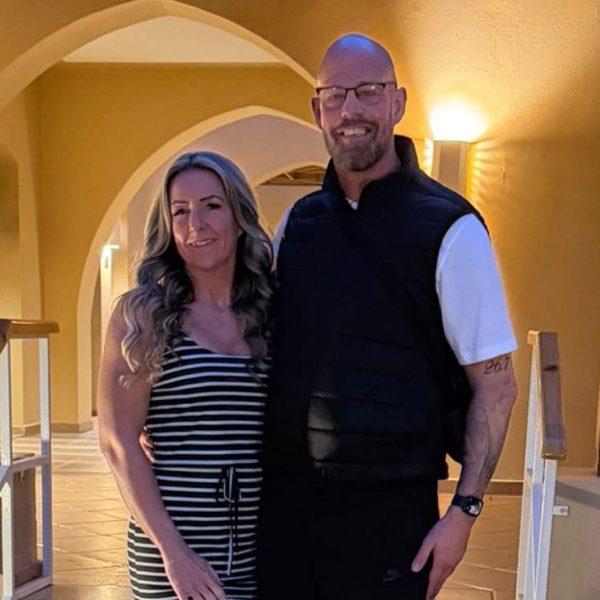
Pain management became another part of the journey. I was initially supported by an IV morphine pump, followed by oral morphine and dihydrocodeine.
After leaving hospital, I made the decision to wean myself off morphine within the first week, but the pain journey continued. Due to this, I became reliant on dihydrocodeine, taking ten 30mg tablets a day for weeks simply to stay ahead of the pain and function.
At the time, I didn’t think of it as dependency. It was a way of coping.
Eventually, through careful choices, patience and finding ways to support my recovery, I was able to move forward without opioid medication. Today, I am completely opioid-free.
That experience changed the way I think about recovery. I knew that my recovery would never be linear. My life’s experiences had already taught me that recovery wasn’t going to be a straight line.
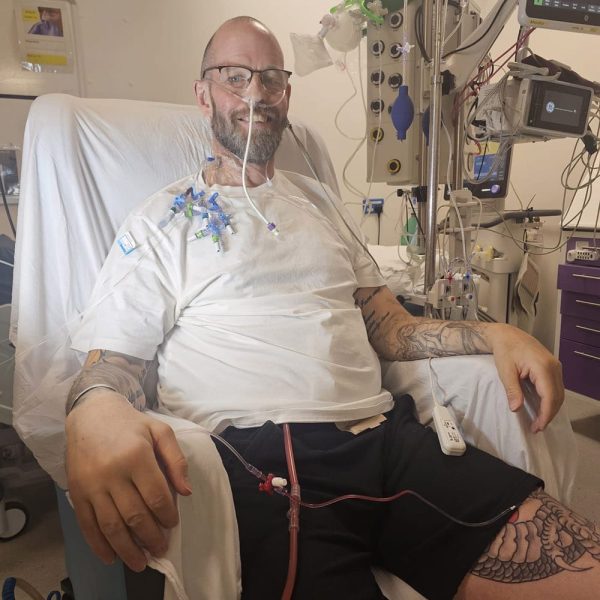
Post-surgery infections resulted in another hospital stay. I also needed daily district nurse visits for weeks.
I had to relearn how to eat, manage hydration, live with a stoma and accept restrictions that included being told not to lift anything heavier than a kettle for 12 weeks, or 84 days. That meant 84 days of being dependent on other people for things I had always taken for granted, even something as simple as making myself a cup of tea.
There were days when simply sitting up in bed felt like hard work. And there were days when I genuinely wondered if I would ever feel like myself again.
But my superpower was to stay curious. I kept asking questions. I kept learning. I wanted to understand what was happening to my body, what I could do, what I couldn’t do and, most importantly, what I could do next.
Eventually, I started rebuilding.
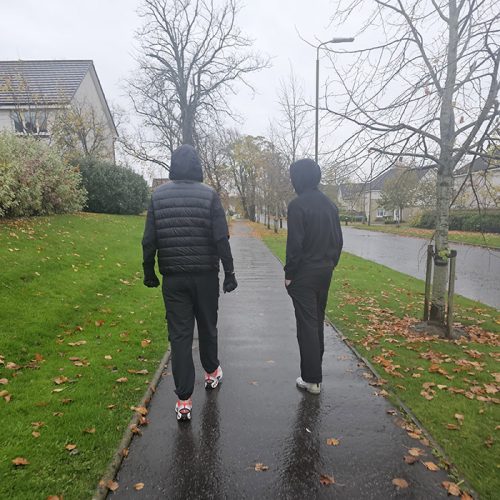
I didn’t do this alone. My wife Julie and my sons, Lewis and James, were there throughout it all. They sat by my bedside, held my hand and watched me come frighteningly close to the edge. I lived the experience while they witnessed it.
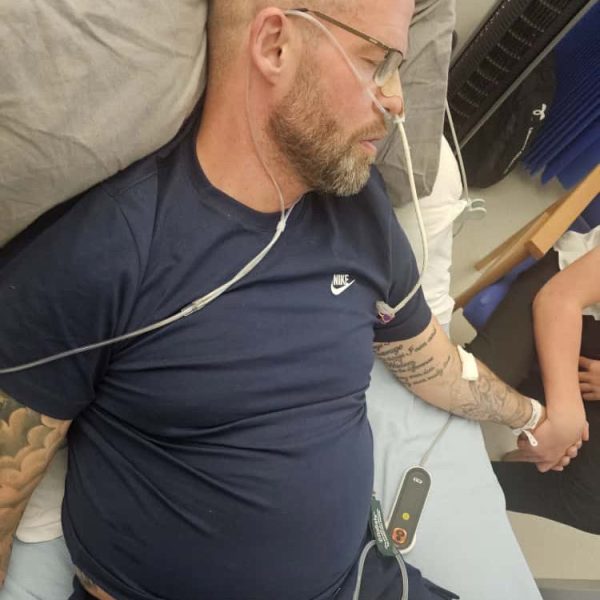
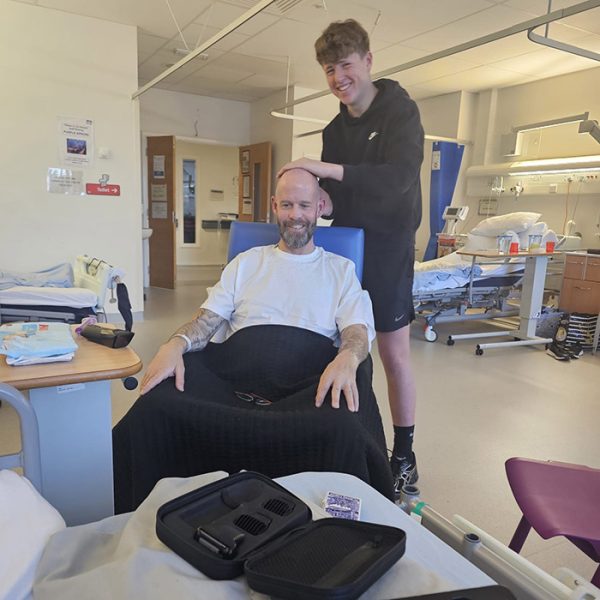
My friends supported me. Messages arrived. People visited. I was carried by a network of people who refused to let me feel alone.
And I will always be grateful to the NHS. My surgeon, Mr Akam Emin, saved my life. The ICU staff, ward nurses, district nurses and wider medical teams at Forth Valley Hospital showed me extraordinary skill, humanity and compassion. I will always be grateful to them all.
Rebuilding wasn’t new to me. My experience of rebuilding goes far beyond my professional life. Since 2003, I’ve had to do the deepest personal work imaginable, unravelling and healing from childhood and intergenerational trauma, and working through complex PTSD, substance misuse, depression, obesity and food addiction. I’ve had to rebuild myself more than once, and those experiences have shaped not only who I am, but how I understand change, resilience and recovery.
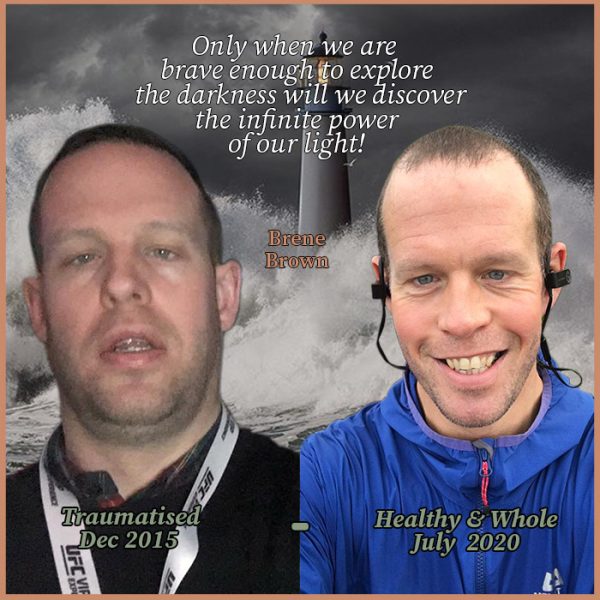
But I had never experienced anything like the autumn of 2025. I had rebuilt my life before, many times, but this time it was my body that had broken down. I couldn’t coach my way through it, outwork it or simply rely on discipline. I had to learn a completely different kind of rebuilding. One based on patience, surrender, trust and respect for the recovery process. That experience changed the way I see recovery, changed the way I coach, and ultimately became the reason Strength After Surgery exists.
Eventually, I had to make a decision.
If I had been given a second chance, I wanted to honour it.
Not through urgency, ego or by trying to prove how quickly I could get back to where I was.
But through endurance, structure and respect for the body that had carried me through. I wasn’t interested in shortcuts. I wanted sustainability. My background had already given me years of experience in health, fitness, nutrition, mindset and human performance. But now I was learning something completely different.
I was learning what it felt like to be the person on the other side of the advice. The person who was frightened. The person who didn’t know what was safe. The person who wanted to move but didn’t know how much was too much. The person who needed practical answers rather than general advice.
That perspective changed everything.
Strength After Surgery was born from that gap.
I realised that recovery needs more than motivation. It needs clarity, structure, and a way to make decisions when confidence is low and the body doesn’t behave predictably.
It needs a way to progress without constantly wondering whether you’re doing too much or not enough.
So I began building what I had needed myself. A practical framework for navigating recovery, rebuilding physical capacity, regaining confidence and eventually returning to living fully.
That became the foundation of the S.T.O.M.A Operating System, the Traffic Light model and the Four Pillars of Sustainable Recovery.
Not a rigid programme or a promise of a perfect recovery. A way of thinking combined with a way of making better decisions and ultimately a safe way of moving forward.
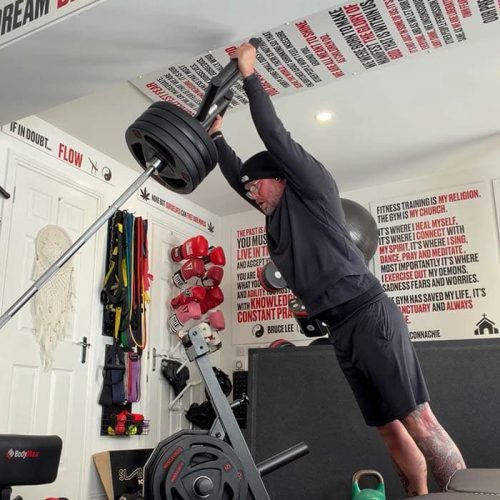
I don’t describe myself as someone who has all the answers. I’m someone who has lived the questions. I’ve experienced major abdominal surgery, a stoma, sepsis, intensive care, significant weight loss, severe pain, medication dependency, infection, physical weakness, loss of identity and the uncertainty that comes with rebuilding a life you once thought you understood. And I’ve experienced what it takes to rebuild.
Strength After Surgery exists so that the next person doesn’t have to navigate all of that uncertainty alone.
If my experience can help someone feel less frightened, more informed, more confident and more capable of rebuilding their life after surgery, then everything I went through has a purpose.
This is not about going back to who you were. It’s about becoming strong enough to live as who you are now.
by Edgar A. Guest
When things go wrong, as they sometimes will,
When the road you’re trudging seems all uphill,
When the funds are low but the debts are high,
And you want to smile but you have to sigh,
When care is pressing you down a bit,
Rest if you must, but don’t you quit.
Life is strange with its twists and turns,
As every one of us sometimes learns,
And many failures turn about
When we might have won had we stuck it out.
Don’t give up though the pace seems slow –
You may succeed with another blow.
Success is failure turned inside out –
The silver tint of the clouds of doubt,
You can never tell how close you are,
It may be near when it seems so far;
So stick to the fight when you’re hardest hit –
It’s when things seem worst that you must not quit.